Project Ragtag (2015-2017, PS4/Xbox One/PC) |
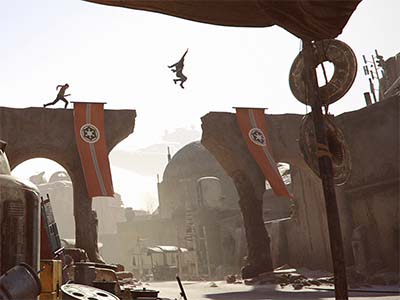
| Project Ragtag was a cancelled Star Wars game in production at EA Visceral Games. I started as Technical Design Lead and became Lead Level Designer mid-project. In both roles, I defined level design workflows and best practices, represented the LD team to other disciplines within the studio, and helped the other LDs solve technical and creative challenges. I also wrote walkthroughs for several levels and did layout and scripting for multiple early demos. |
 |
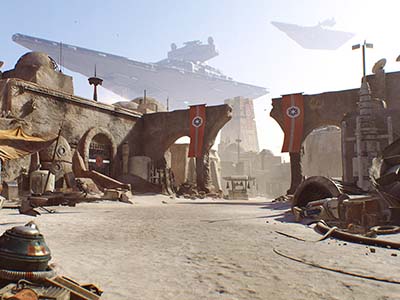 |
| In the above pictures you can see one of the early demos I worked on, a street in Mos Eisley under heavy Imperial occupation. |
Battlefield Hardline (2013-2015, PS4/Xbox One/PS3/Xbox 360/PC) |
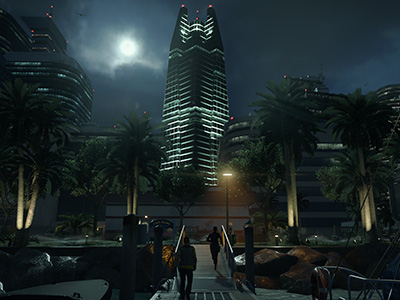
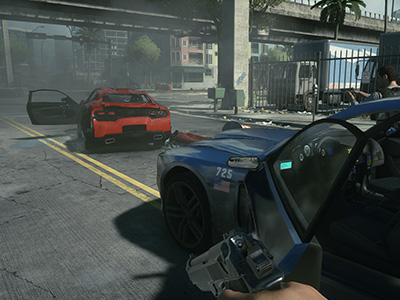
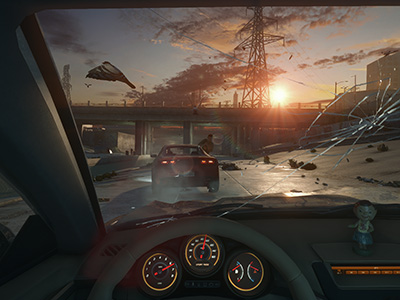
| While on Battlefield Hardline, I started by with building our "vertical slice" demo, which later became the game's prologue. After that I built the car chase segment of episode 6, and then built the entirety of episode 9. In all three cases I was responsible for layout, gameplay design, combat scripting, some SE integration, plus technical requirements such as memory management and performance. I also provided technical scripting support across all 10 levels. |
 |
 |
 |
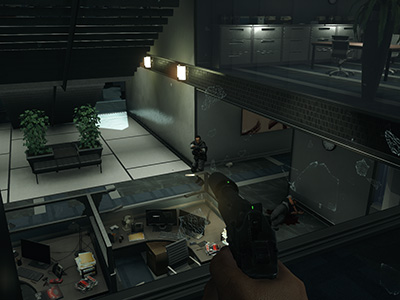 |
| Clockwise from top left: episode 9 skyscraper reveal, prologue final arrest scene, episode 9 office shootout, episode 6 L.A. river chase. |
Dead Space 3 (2011-2013, PS3/Xbox 360/PC) |
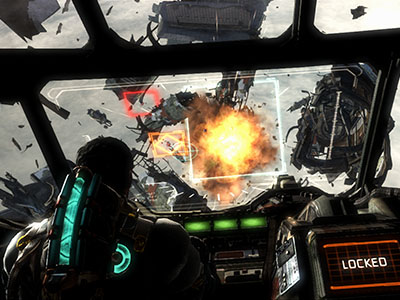
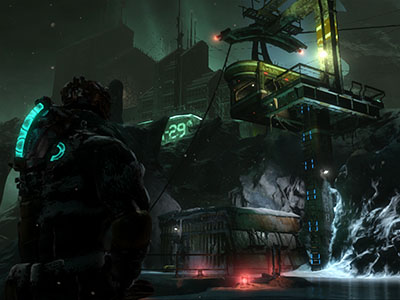
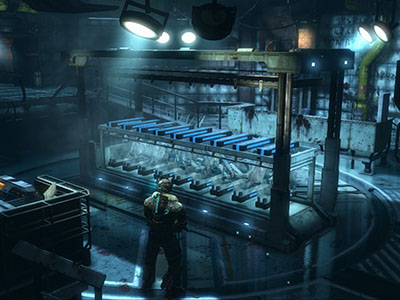
| I worked on Dead Space 3 during the entire 2-year development cycle. Early in development I built and maintained our first "snow crash" demo, and did the block out for 5 other levels in the game. When production ramped up, I drove 3 levels (prologue, chapter 7, and chapters 14/15) to completion and baby-sat other levels as needed. After shipping, I contributed to one of the maps for the Dead Space 3: Awakened DLC. My responsibilities during production were design and scripting of gameplay elements across various levels, such as combat, puzzles, pickups and treasures, implementing story SEs, and technical requirements such as memory management and performance. |
 |
 |
 |
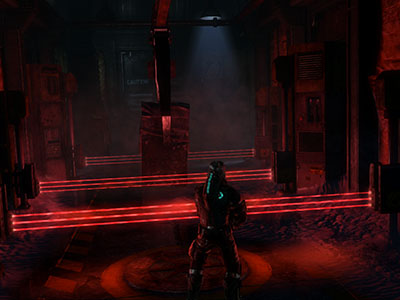 |
| Clockwise from top left: the "snow crash" demo which became chapter 7, the reveal of the Research Facility in chapter 14, laser puzzle from chapter 14, ice block puzzle from chapter 15. |
Dead Space 2 (2010-2011, PS3/Xbox 360/PC) |
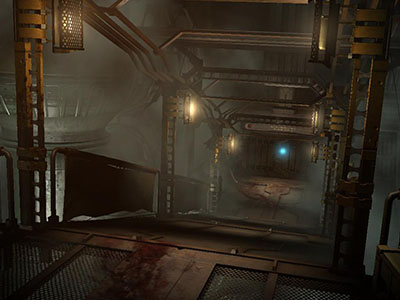
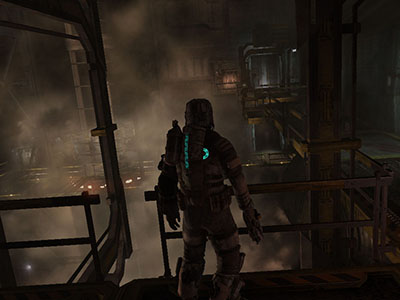
| After joining the Dead Space 2 project in the final year of development, I took over and shipped one of the ten levels that make up the single-player campaign. I also contributed to the single player Dead Space 2: Severed DLC, and designed and built one of the two multiplayer maps for the Dead Space 2: Outbreak DLC. In all cases, I was responsible for design and scripting of all gameplay elements such as combat, puzzles, pickups and treasures, for implementing story SEs, and for technical requirements such as memory management and performance. |
 |
 |
 |
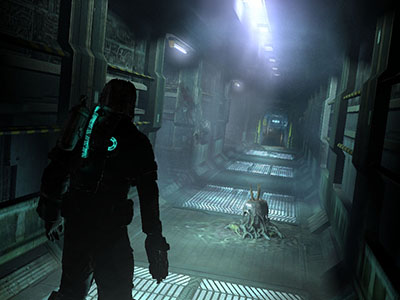 |
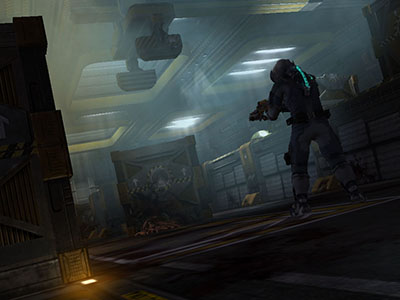
| Pictured above are some of the halls and rooms of the CEC Facility, an industrial plant devoted to processing and refining the fuels mined from Saturn's moon Titan. By the time Isaac Clark arrives here, the necromorph invasion is complete, and he must contend with the resulting hordes of shambling and transformed victims. This level was split into two chapters, 8 and 9, in the final game. |
MotionX Poker and MotionX Poker Quest (2008, iOS) |
| I was project lead and designer for two iPhone games, MotionX Poker and its sequel, MotionX Poker Quest. For both of these games I performed all aspects of game and systems design, as well as UI design, art direction, testing, tuning, and programming as needed. |
|
|
| For the original MotionX Poker (above), I designed the core gameplay systems that would keep players interested in a game that, in essence, lasts only about 30 seconds. These systems included: unlockable content to keep the game fresh, achievements for long-term goals, extra bonuses for tactical play, and statistics to make players' careers feel more unique. I also spent a lot of time crafting the basic UI feel and navigation to take best advantage of the iPhone's unique hardware. |
|
|
| Designing the sequel, MotionX Poker Quest, was a much different experience. The basic game systems were already established and worked well, so my goal was to add more of everything -- more content, more achievements, and more bonuses. In a shorter schedule we produced twice the content of the original, and added new tweaks and polish to the UI and gameplay systems. |
Gods & Heroes: Rome Rising (2005-2007, shipped 2011, PC) |
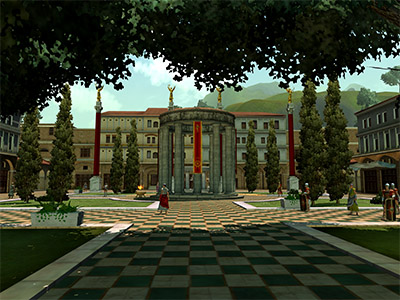
| I designed and built over a dozen zones, including overland areas, dungeons, and cities, for Gods & Heroes, an MMORPG based on Roman history and mythology. The game used Maya for terrain, object creation, and tree placement, Renderware Studio for object placement and 3D positioning of gameplay entities, and an in-house tool (called simply "tool.exe") for gameplay scripting. |
 |
 |
 |
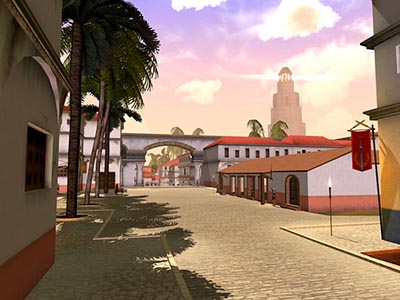 |
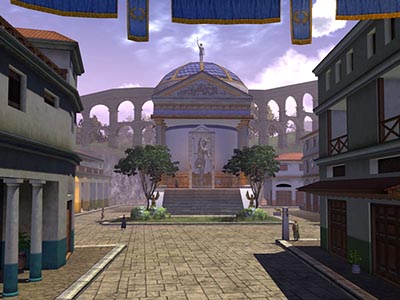
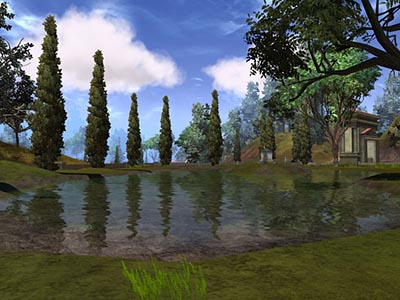
| Top row: Rome (left) was the game's central and largest city, Vinetum (right) was one of the game's terrain areas. Bottom row: Aricia (left), Ostia (right) were two more of the game's 5 cities. In all cases I was responsible for paper design, terrain and street layout, building and object placement, and NPC placement and scripting.
|
Goldeneye: Rogue Agent (2004, PS2/Xbox/GameCube) |
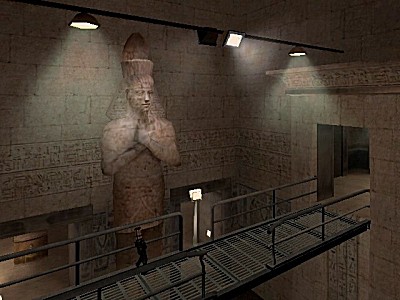
| I built four multiplayer levels for Goldeneye: Rogue Agent. The game used the Medal of Honor: Rising Sun engine and the levels were built in 3DS Max. All entity placement and scripting was done using custom tools and scripts inside Max. On this project each level designer was paired up with a dedicated environment artist to create their levels. |
 |
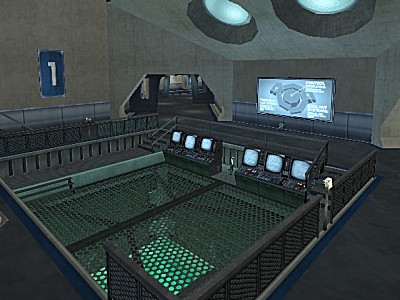 |
| The levels are pictured above. On the left is Pyramid, a deathmatch level inspired by scenes from The Spy Who Loved Me. Pyramid was built in both 2-player and 4-player versions. On the right is Dr. No's Reactor, which was designed for the game's "domination" game mode. Reactor was built in both 4-player and 8-player versions. I was responsible for paper design, 3D layout, entity placement and scripting on all four levels. |
Medal of Honor Allied Assault: Breakthrough (2003, PC) |
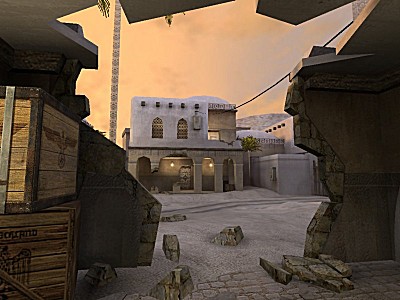
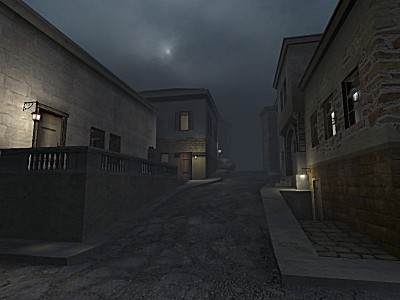
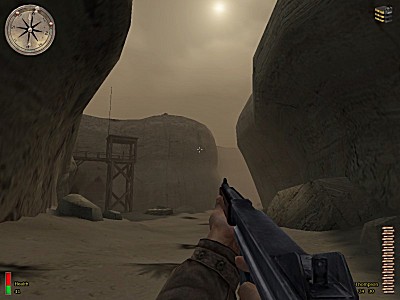
| I built two single-player and two multiplayer levels for Breakthrough, an expansion pack for Medal of Honor: Allied Assault. Allied Assault used a modified Quake 3 engine, so all levels were built primarily with brushes and terrain meshes created by me. Levels also featured a smattering of placeable models such as vegetation, vehicles, and other small props, created by the art team. |
 |
 |
 |
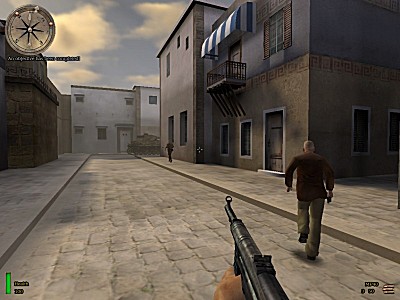 |
| Top row: Tunisia (left), Anzio Beach (right) were both built to support the game's MP mode "liberation," which was about breaking your teammates out of jail. Bottom row: Kasserine Pass Part 2 (left), Bizerte Canal (right) were the second and third chapters of the SP campaign. I was responsible for paper design, building, lighting, and gameplay implementation for all four levels. |





